Key takeaways
- Paint the ceiling before the walls.
- A matte finish cuts glare and hides flaws.
- Work in sections, keeping a wet edge.
Choosing the finish
A matte finish is the usual choice for ceilings: it reflects little light and hides small imperfections better. In a bathroom or kitchen, a slightly more washable finish may suit.
Order of work
- Protect floors and furniture.
- Cut in the ceiling edges with a brush.
- Roll the surface in sections.
- Let it dry, then apply a second coat.
- Paint the walls afterward.
Avoiding streaks
- Keep a “wet edge”: finish each section before the previous one dries.
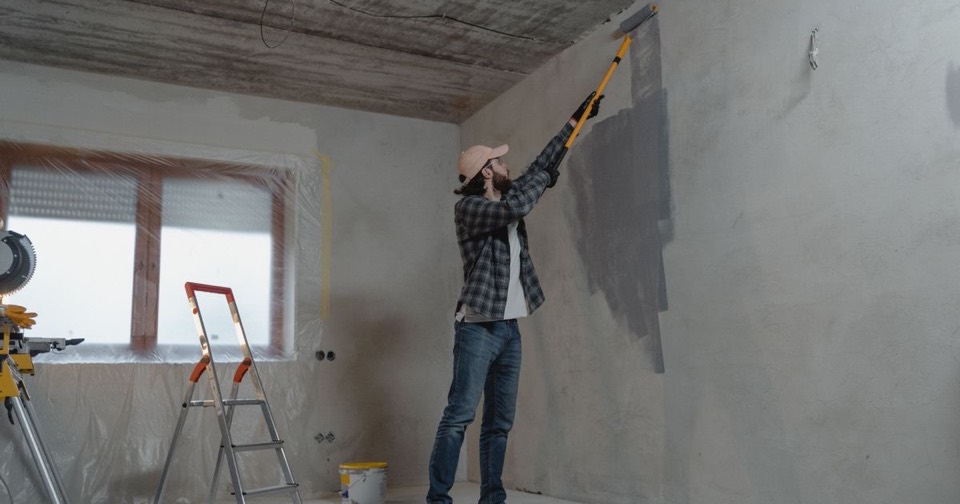
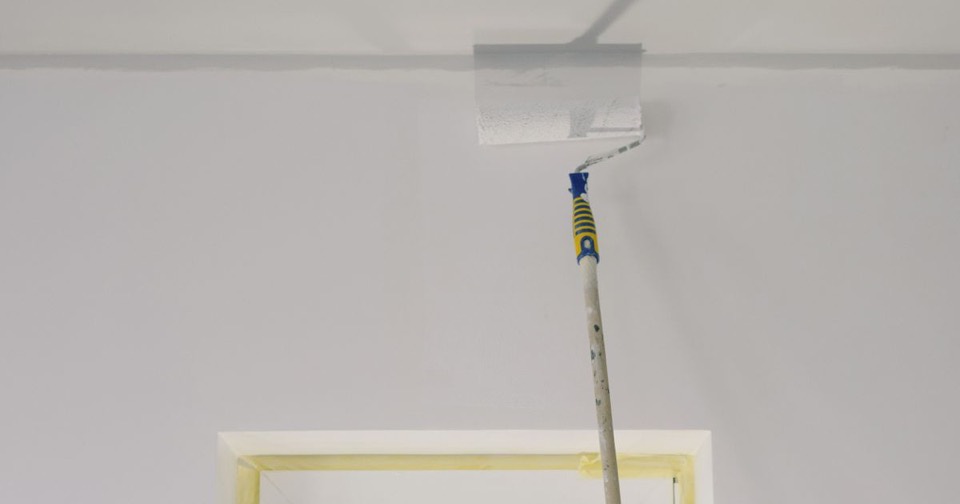
- Use an extension pole on the roller to keep a steady motion.
- Light from the side to see missed spots while you work.
Textured ceilings
Textured surfaces soak up more paint and need a longer-nap roller. Some old textures deserve testing before any scraping, especially in an older home.
Frequently asked questions
- Should a ceiling be primed?
- Yes if it is new, repaired or stained. On a sound, already-painted surface it is not always needed.
- Why does my ceiling show streaks?
- Often because an edge dried before it was blended, or coverage is thin. A second coat usually fixes it.